Your cart is empty
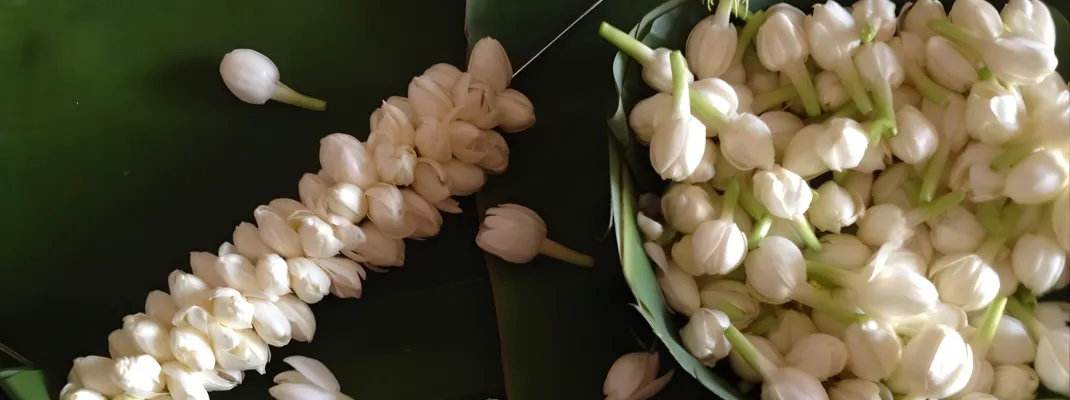
The Art of Traditional South Indian Flower Garland Making
Flower garlands hold profound cultural and spiritual significance in South India. Used in temple deities, weddings, and special ceremonies, these garlands are meticulously crafted from fresh jasmine, rose, marigold, and tulsi leaves. The art of garland making requires dedication, skill, and an eye for color and pattern.
Our craftsmen, many of whom come from families with generations of experience, start their work before dawn. The freshness of the flowers is crucial. Once picked, the flowers are quickly transported to our tying facility where they are woven into complex designs using natural fibers.
"A beautifully tied garland is a physical manifestation of devotion. Each knot binds together fragrance, color, and spiritual intent."
Exporting these delicate items poses unique challenges. We have perfected a specialized cold-chain packaging technique that maintains optimal moisture and temperature levels, allowing these traditional masterpieces to reach international temples and homes looking and smelling as fresh as the moment they were tied.
Frequently Asked Questions
Jasmine (Malligai), roses, marigolds, and sacred basil (tulsi) are the primary components of traditional garlands.
We use custom temperature-controlled packaging boxes with specialized moisture pads that maintain a strict 4-8°C environment.
100% by hand. No machine can replicate the intricate knotting and precise floral placement of our traditional craftsmen.
Yes, we take specific design requests and lengths for international wedding ceremonies.
Yes, we use a traditional banana-tree fiber string (Vaazhai naar) which is strong, natural, and biodegradable.